
Fathin Dosunmu
Co-founder
Selected work · ELAV
Roman Gall and I co-founded ELAV to connect Slack, Gmail, meetings, and docs into one sourced, rewindable company memory. It handles the mechanical work of finding context, tracing what changed, and preparing the next move. People keep the judgment: what is true, what matters, and what gets saved or sent.
Founding team
Fathin Dosunmu
Co-founder

Roman Gall
Co-founder
We co-founded ELAV and have shaped its product and direction together from the beginning.
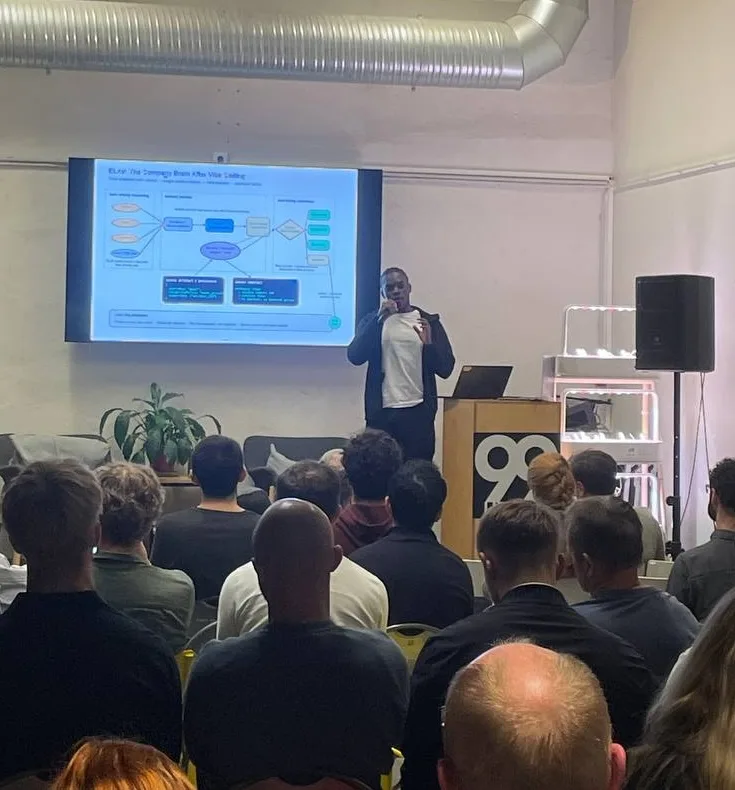
Small teams rarely lack information. They lose the thread between an inbox, a Slack conversation, a meeting note, and the document someone updated two weeks ago. The cost appears later: a missed promise, a repeated decision, a client risk nobody connected in time.
The product needed to remember across those tools without becoming another place people had to maintain.
AI handles the mechanical parts brilliantly and the judgment parts badly. Judgment is the entire thing people remain responsible for.
The easy version would have been a chatbot that gave confident answers and quietly took action. The stronger product separates mechanics from responsibility: ELAV can retrieve, connect, cite, draft, and propose. A person approves consequential changes and actions.
I worked across the product shape and the engineering stack, from deciding how company memory should behave to making source connections, evidence, permissions, approval paths, and production delivery real.
A useful company memory touches sensitive conversations and decisions. That made security part of the product model: permission-aware retrieval, tenant boundaries, approval gates, visible sources, and explicit handling of external input rather than blind trust in whatever entered the system.
The interface could stay simple because those constraints lived underneath it.
ELAV is built for teams of 5 to 50 where company context no longer fits in everyone’s heads. It can show what changed, where an answer came from, and what is waiting for a decision without pretending the AI should make that decision itself.
I like products where the hard part is not generating more output, but making the system useful, trustworthy, and commercially real.